
Polish Citizenship: Requirements & B1 | LegalMigra
 Sergii Nevzgliad
- Methods of Acquiring Polish Citizenship
- Requirements for Recognition as a Polish Citizen
- General Requirements
- Residency Timeframes
- The Polish Language B1 Exam
- Accepted Proof of Language Proficiency
- What to Expect on the B1 Exam
- Step-by-Step Procedure
- Step 1: Gather Required Documents
- Step 2: Pay the Stamp Duty
- Step 3: Submit Your Application
- Step 4: The Administrative Process
- Step 5: Receive the Decision
- Step 6: Apply for an ID Card and Passport
- Conclusion
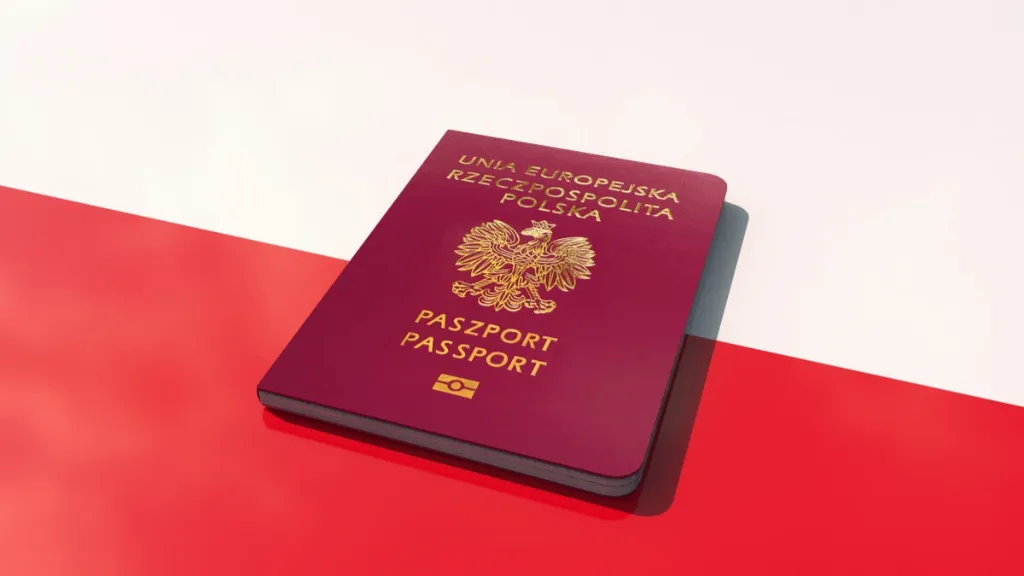
Acquiring Polish citizenship is a significant milestone for many expatriates living in Poland. Not only does it grant you the right to vote and hold a Polish passport, but it also makes you a citizen of the European Union. In 2026, the pathway to Polish citizenship involves specific residency requirements, proof of language proficiency, and a formal application procedure.
This comprehensive guide covers everything you need to know about obtaining Polish citizenship in 2026.
Methods of Acquiring Polish Citizenship
There are two primary ways a foreigner can obtain Polish citizenship:
- Granting by the President of the Republic of Poland
- Recognition as a Polish Citizen
While the President has the constitutional power to grant citizenship to any foreigner without requiring them to meet specific residency or language conditions, the more common and structured route is Recognition as a Polish Citizen. This guide focuses on the recognition process.
Need help with documents?
Our lawyers will help you quickly prepare and submit your citizenship documents to avoid mistakes and delays.
Requirements for Recognition as a Polish Citizen
To be recognized as a Polish citizen in 2026, you must fulfill a set of specific criteria. The requirements vary slightly depending on your personal circumstances (e.g., marriage to a Polish citizen, holding a permanent residence permit, or having a Polish Card).
General Requirements
Most applicants must meet the following general conditions:
- Continuous Legal Stay: You must have lived continuously and legally in Poland for a specified period on the basis of a permanent residence permit, a long-term EU resident permit, or the right of permanent residence.
- Stable and Regular Income: You must prove that you have a stable and regular source of income to support yourself and your dependents in Poland.
- Legal Right to Occupy a Dwelling: You must have a legal title to an apartment or house (e.g., a rental agreement or ownership deed).
- Language Proficiency: You must demonstrate knowledge of the Polish language at the B1 level or higher.
Residency Timeframes
The required duration of continuous stay depends on your status:
- 3 Years: For those holding a permanent residence permit, EU long-term resident permit, or right of permanent residence, and who have a stable income and a place to live.
- 2 Years: For those who have been married to a Polish citizen for at least 3 years, or for stateless individuals.
- 1 Year: For holders of a permanent residence permit obtained on the basis of Polish ancestry or the Pole’s Card (Karta Polaka).
The Polish Language B1 Exam
One of the most critical requirements for citizenship recognition is proving your proficiency in the Polish language. As of 2026, the standard requirement remains the B1 level.
Accepted Proof of Language Proficiency
You can prove your B1 proficiency through:
- State Certificate: A certificate of proficiency in Polish as a foreign language at the B1 level, issued by the State Commission for the Certification of Proficiency in Polish as a Foreign Language.
- School Diploma: A school-leaving certificate from a school in Poland or a school abroad with Polish as the language of instruction.
What to Expect on the B1 Exam
The state certification exam tests four key language skills:
- Listening Comprehension: Understanding spoken Polish in everyday contexts.
- Reading Comprehension: Grasping the main ideas and details of written texts.
- Writing: Producing clear, structured texts on familiar topics.
- Speaking: Engaging in conversations, expressing opinions, and describing experiences.
Tip: Registration for state exams fills up extremely fast. It is highly recommended to book your exam spot months in advance.
Step-by-Step Procedure
The process of applying for recognition as a Polish citizen involves careful preparation and coordination with the Voivodeship Office (Urząd Wojewódzki).
Step 1: Gather Required Documents
Ensure you have all necessary documentation before applying. Essential documents typically include:
- A completed application form for recognition as a Polish citizen.
- 1 recent passport-style photograph.
- A certified copy of your valid passport or travel document.
- A certified copy of your permanent residence permit or EU long-term resident permit.
- Proof of Polish language proficiency (B1 certificate or school diploma).
- Civil registry documents (birth certificate, and marriage certificate if applicable), issued by a Polish Civil Registry Office (USC). Foreign documents must be transcribed in Poland.
- Proof of stable income (employment contracts, tax returns).
- Proof of accommodation (rental contract or ownership deed).
Step 2: Pay the Stamp Duty
A stamp duty is required for the decision on recognition as a Polish citizen. In 2026, the standard fee is 219 PLN. Keep the payment receipt, as it must be attached to your application.
Step 3: Submit Your Application
Applications are submitted to the Voivode (Wojewoda) competent for your place of residence. You can submit the documents in person at the Voivodeship Office or send them via registered mail. If submitting by mail, ensure your signature on the application form is officially certified by a notary.
Step 4: The Administrative Process
The Voivodeship Office will review your application. If any documents are missing, you will be called to supplement the application within a specified timeframe. The office will also request opinions from the police and the Internal Security Agency (ABW) to ensure you do not pose a threat to national security or public order.
Step 5: Receive the Decision
By law, administrative decisions should be issued within 1 month, or up to 2 months in complex cases. However, due to high volumes, the actual processing time can take several months. Once the Voivode issues a positive decision, you officially become a Polish citizen.
Step 6: Apply for an ID Card and Passport
After receiving your citizenship decision, you can apply for your Polish ID card (Dowód Osobisty) at your local municipality office (Urząd Gminy/Miasta) and subsequently for a Polish passport.
Conclusion
Securing Polish citizenship in 2026 requires dedication, especially regarding the B1 language exam and gathering extensive documentation. By understanding the residency requirements, preparing thoroughly for the language test, and carefully following the procedural steps, you can successfully navigate the process and enjoy the full benefits of being a Polish and EU citizen.
Related Services
Explore other legal solutions that might be relevant to your situation.

Need help with your case?
Our immigration experts are ready to assist you with residence cards, work permits, and business relocation.
Get a free consultation